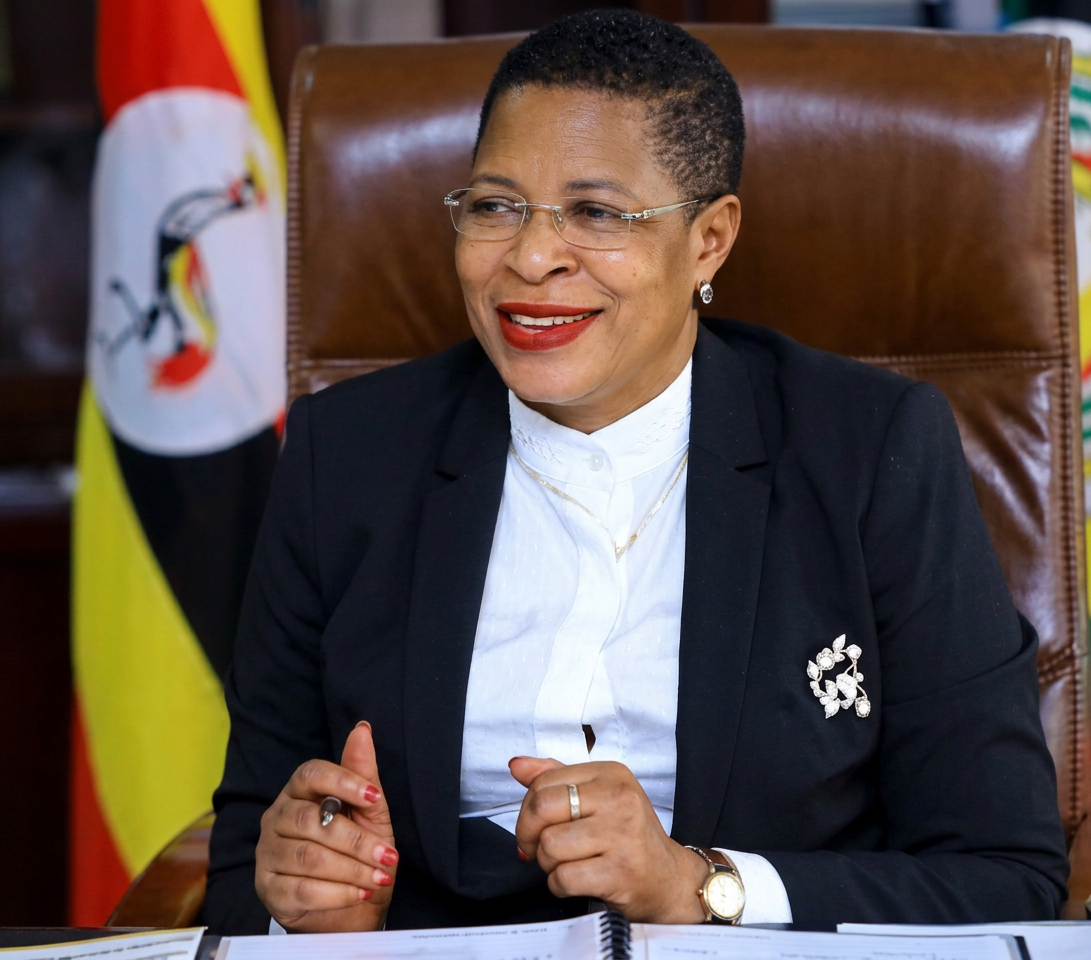

Yet suddenly, the support vanished. Why now? Why immediately after Parliament passed the controversial Protection of Sovereignty Bill under Among’s stewardship? And could the recent Rolls-Royce controversy have accelerated the fallout?
In Uganda’s shifting political landscape, alliances are never permanent, loyalty is constantly tested, and public perception can suddenly alter elite political calculations. The latest dramatic twist came when the Patriotic League of Uganda (PLU), under the leadership of Gen.
Muhoozi Kainerugaba, abruptly withdrew support for Speaker Anita Annet Among and Deputy Speaker Thomas Tayebwa in the race for leadership of the 12th Parliament. The announcement, communicated by PLU Secretary General David Kabanda, stunned many within the ruling National Resistance Movement (NRM) establishment and immediately triggered speculation about deeper tensions inside Uganda’s power structure.

For months, Anita Among appeared politically secure. She had projected herself as a loyal mobilizer for President Yoweri Museveni and, increasingly, as someone sympathetic to the “Muhoozi Project” — the growing political movement associated with Gen. Muhoozi Kainerugaba’s future ambitions.
Yet suddenly, the support vanished. Why now? Why immediately after Parliament passed the controversial Protection of Sovereignty Bill under Among’s stewardship? And could the recent Rolls-Royce controversy have accelerated the fallout?
This analysis examines the possible political calculations behind the decision, the personalities involved, and what this could mean for Anita Among’s political future and the race for Speaker in Uganda’s 12th Parliament.
THE WITHDRAWAL THAT SHOOK THE NRM CAMP
According to reports, PLU formally retracted its endorsement of Anita Among and Thomas Tayebwa “with immediate effect,” effectively reversing guidance earlier issued in March supporting the duo for Speaker and Deputy Speaker positions.
The wording of the statement was politically significant. It reportedly indicated that further direction would come from President Museveni himself. That phrase alone reveals several important realities:
- Muhoozi may be avoiding appearing independent of Museveni
Gen. Muhoozi Kainerugaba, despite his growing political influence, still operates within the authority structure of President Museveni. By withdrawing support “pending communication” from Museveni, PLU may be signaling discipline and caution rather than rebellion. - The decision may reflect broader State House calculations
This could indicate concerns at the highest level about public anger, parliamentary image problems, or the future balance of power within the NRM. - It creates uncertainty around Among’s inevitability
Anita Among’s greatest political strength has been the perception that she is unbeatable. Once elite support looks uncertain, political allies begin reassessing loyalties.
DID THE ROLLS-ROYCE CONTROVERSY CHANGE EVERYTHING?
One of the biggest political talking points in recent days has been Anita Among’s alleged acquisition of a luxury Rolls-Royce vehicle, a development that triggered backlash on social media and criticism from sections of the Ugandan public already angry about inequality and parliamentary spending.
Interestingly, Gen. Muhoozi himself publicly distanced his image from the controversy. In remarks reported by Pulse Uganda, Muhoozi stated:
“I have been Mzee’s son for 52 years but I have never sat in a Rolls Royce ever. I don’t think Mzee has sat in one either.”
That statement was politically loaded.
Muhoozi was not merely discussing a car. He was signaling several things:
- an attempt to present himself as modest and nationalist,
- a contrast between his image and perceptions surrounding parliamentary extravagance,
- and perhaps a subtle distancing from Anita Among’s public image.
At a time when many Ugandans are struggling economically, displays of luxury by political elites can quickly become politically toxic. Parliament has already faced public criticism over expenditure and corruption allegations. Muhoozi also recently supported calls to reduce Parliament’s budget and redirect resources toward ordinary Ugandans.
This matters because political branding is becoming increasingly central to Muhoozi’s long-term positioning.
MUHOOZI’S POLITICAL IMAGE VS. AMONG’S POLITICAL STYLE
The tension may also reflect a clash of political styles.
Anita Among’s style:
- highly transactional,
- institutionally powerful,
- parliamentary control-oriented,
- elite networking,
- aggressive political management.
Muhoozi’s emerging style:
- populist-nationalist messaging,
- military discipline image,
- anti-elite rhetoric at times,
- youth-oriented political branding,
- social media-driven influence.
These two styles can cooperate temporarily — but they can also collide.
Among’s authority comes from controlling Parliament and political structures. Muhoozi’s political energy comes from presenting himself as a national mobilizer above traditional political excesses. If public anger against Parliament grows, Muhoozi may see strategic advantage in distancing himself from parliamentary elites associated with wealth and controversy.
THE SOVEREIGNTY BILL: WHY SUPPORT DISAPPEARED AFTER AMONG HELPED PASS IT
Ironically, Anita Among had just presided over the passage of the Protection of Sovereignty Bill — legislation many nationalist and pro-Muhoozi supporters strongly favored.
The bill was framed as protecting Uganda from foreign influence and interference. Critics, however, warned it could restrict civil society and dissent. Reuters reported that some controversial clauses were softened after concerns from the Bank of Uganda and development actors.
For many observers, Among appeared to have delivered a key ideological victory aligned with nationalist forces close to Muhoozi’s movement. So why would support disappear immediately afterward?
Several explanations are possible:
1. The bill may have completed Among’s usefulness
Political alliances in Uganda are often tactical. Once the bill passed, some actors may have felt less dependent on Among politically.
2. Muhoozi may want his own Speaker candidate
PLU has hinted at fronting its own candidate for Speaker.
That suggests the movement wants direct institutional control rather than indirect alignment through Among.
3. The public relations environment changed
The Sovereignty Bill energized nationalist politics, but the Rolls-Royce controversy may have undermined the image of sacrifice and patriotism that nationalist messaging requires.
4. Museveni may be recalibrating internal power balances
President Museveni historically prevents any single political figure from becoming too powerful. Anita Among has grown enormously influential inside Parliament and the NRM structure. A temporary withdrawal of support may remind political actors where ultimate authority still lies.
THE FEAR OF CENTERS OF POWER
One reason this battle matters so much is because the Speakership is not just ceremonial. In Uganda, the Speaker controls:
- parliamentary procedure,
- committee influence,
- legislative prioritization,
- political patronage,
- visibility,
- and national political relevance.
That makes the office strategically important in any future succession politics.
Even if Anita Among has repeatedly stated she has no presidential ambitions, powerful political figures do not only become threats through formal declarations. Influence itself creates concern.
In Uganda’s political system, the emergence of parallel power centers is often closely watched.
Among has:
- built loyalty among MPs,
- expanded her national visibility,
- cultivated regional alliances,
- and positioned herself as one of the most powerful women in Uganda’s political history.
That alone may create anxiety among factions preparing for the post-Museveni transition era.
THE INTERNATIONAL DIMENSION
Among’s political image has also been affected internationally.
She previously faced sanctions from both the United States and the United Kingdom over allegations linked to corruption and governance concerns.
While such sanctions can strengthen nationalist credentials domestically among some supporters, they also complicate elite calculations. Political actors seeking long-term legitimacy may not want to be excessively tied to controversial international narratives.
Muhoozi, who increasingly appears to be shaping a future presidential image, may therefore be careful about the political associations he keeps publicly.
WHAT HAPPENS NEXT?
Several scenarios are possible:
Scenario One: Museveni Re-Endorses Among
If President Museveni ultimately backs Anita Among, many NRM MPs could quickly return to her side. Museveni’s word still carries enormous weight in the ruling establishment.
Scenario Two: PLU Fronts a New Candidate
If Muhoozi wants stronger direct influence in Parliament, PLU may rally behind a different Speaker candidate more closely aligned to the movement.
Scenario Three: Negotiated Settlement
Uganda’s elite politics often end in compromise. Among could retain Speakership while conceding influence in other strategic areas.
Scenario Four: A Broader Political Isolation
If elite support continues weakening, Among could face the most difficult political battle of her career despite her current institutional strength.
CONCLUSION
The withdrawal of PLU support for Anita Among is bigger than a parliamentary contest. It is a glimpse into Uganda’s emerging succession politics, image management battles, and internal elite rivalries.
The Rolls-Royce controversy may seem symbolic, but symbolism matters deeply in politics. At a time when Muhoozi Kainerugaba appears determined to shape an image of nationalism, patriotism, and connection with ordinary Ugandans, association with elite luxury and parliamentary excess may have become politically inconvenient.
At the same time, Anita Among remains one of the most powerful political figures in Uganda. She controls networks, commands parliamentary influence, and still has allies across the NRM establishment.
This means the battle for the 12th Parliament Speakership may not simply be about Anita Among versus other candidates. It may actually represent an early contest over who shapes Uganda’s future political order in the post-Museveni era.
And in Ugandan politics, when support is suddenly withdrawn, it is rarely just about one decision. It is usually a signal that deeper battles are already underway.
By Denish Ongora
Leave a Reply